My eighth great-grandfather, John Lewger (1602–1665), was one of the earliest architects of Maryland's colonial government. He served as the colony's first Secretary, first Attorney General, and one of its first legal minds, helping establish administrative and legal systems that still echo in Maryland today (Maryland State Archives – Lewger Biography).
This page is both historical and personal. It documents who John Lewger was and why his story still matters to me.
Early life and meeting Lord Baltimore
John Lewger was born in London in 1602 and educated at Trinity College, Oxford, where he formed a close friendship with Cecil Calvert, later the 2nd Lord Baltimore (Historic St. Mary's City).
Lewger was originally ordained in the Church of England but converted to Catholicism in 1635, a decision that reshaped his life and tied him more closely to the Calvert family (Oxford Dictionary of National Biography – Lewger).
Together, Lewger and Cecil Calvert worked on A Relation of Maryland, a promotional tract written to attract settlers to the new colony (Maryland State Archives – Relation of Maryland).
In 1637, Cecil Calvert sent Lewger to Maryland as an advisor and administrator for his brother, Governor Leonard Calvert. Lewger traveled with his wife Anne and their young son, leaving England to help build a colony founded on religious tolerance.
Serving in early Maryland
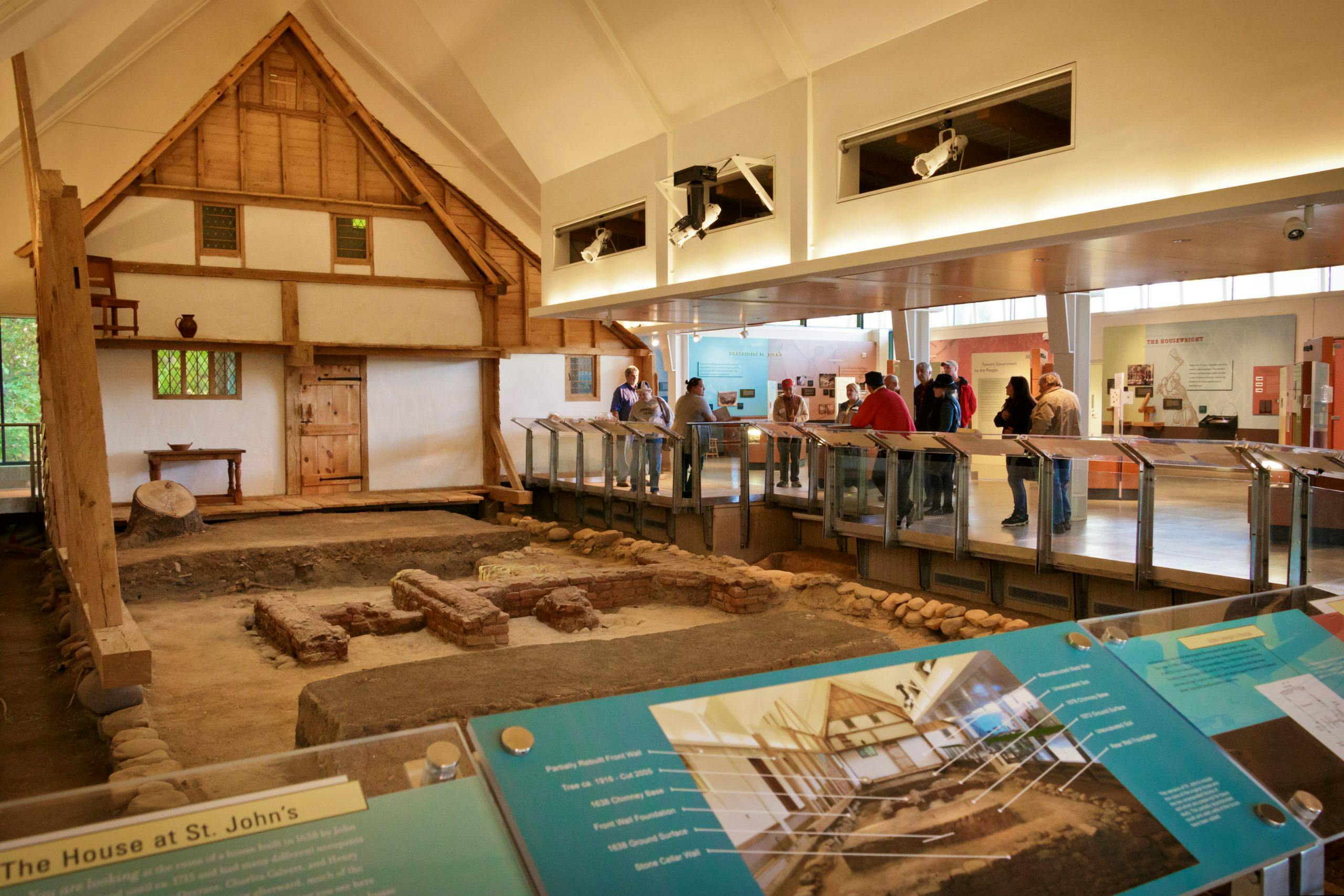
In 1638, Lewger built St. John's, a large house on a 200-acre tract in St. Mary's City. It was one of the largest structures in the colony and became a center of political life (Historic St. Mary's City – St. John's Site).
Maryland's early General Assembly met at St. John's, making Lewger's home a literal birthplace of Maryland's legislative tradition.
Lewger served as:
- Secretary of the Province, managing official records and correspondence
- Attorney General, advising the governor and prosecuting cases
- Clerk of the Assembly, recording laws and proceedings
- Keeper of land records and collector of rents, registering land grants and managing revenue
These roles are documented extensively in colonial records held by the Maryland State Archives (Maryland State Archives – Provincial Officers).
He is often described as Maryland's first practicing lawyer and an early foundation of the Maryland bar.
Turbulent times and return to England

Maryland's stability collapsed in the mid-1640s during Ingle's Rebellion. In 1645, Lewger's home was looted, and he was captured and taken in chains back to England (Maryland State Archives – Ingle's Rebellion).
He was released later that year and returned to Maryland, but his wife Anne died soon after. Following the death of Governor Leonard Calvert and continued unrest, Lewger left Maryland permanently in 1648.
Back in England, Lewger became a Roman Catholic priest and served as Cecil Calvert's personal chaplain. In 1665, while ministering to plague victims during the Great Plague of London, he contracted the disease and died (British History Online – Great Plague).
Full circle
Lewger's son remained in Maryland and continued the family line.
Eight generations later, I work for the State of Maryland. John Lewger helped establish Maryland's earliest systems of governance, recordkeeping, and law. I now serve the same state in a modern public-sector role.
The connection is concrete. Nearly four centuries apart, the work still centers on institutions, public service, and stewardship. That continuity gives my career a deeper sense of place and perspective.