Finishing Anna Karenina and What It Stayed With Me
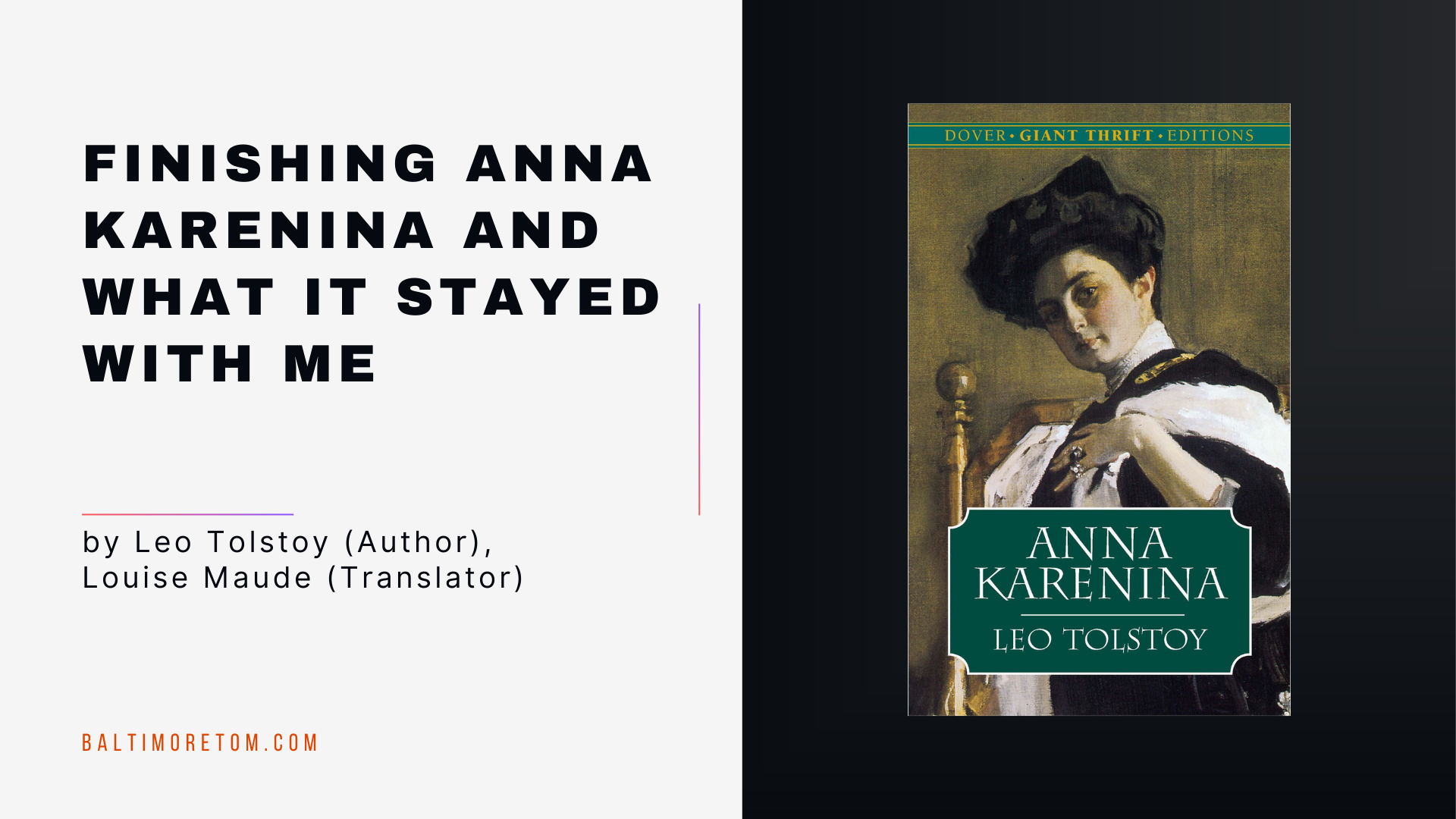
I closed the final pages of Anna Karenina with both a sense of loss and gratitude. Tolstoy’s novel was never simply a story to me. It became a companion through months of reading and many thoughts about life, love, and how we shape meaning from the choices we make. Completing this book felt less like an ending and more like arriving at a deeper understanding of what it means to live with intention, with regret, and with hope.
From the earliest parts, I was drawn not only to Anna’s intense and tragic path but to Levin’s quiet, searching life. Tolstoy set these two stories side by side in a way that made me think closely about what I value in my own life. Anna’s passionate, unrestrained choices lead her into depths of isolation that I felt with discomfort and recognition of how hard emotional life can be when it outpaces the structures that support us. Her tragedy is not distant or abstract. It felt real, weighted by societal pressures and by her own yearning for something that could not be stable in a world that demanded at every turn compromise, endurance, and resilience. As critics have observed, Anna’s story shows what happens when a life built on passion alone can unravel under its own weight.
And yet, as I walked with Levin through fields and through his introspection, I felt a resonance deeper than admiration. There was in him a search for meaning that reflected my own. His steady attention to the rhythms of rural life, the honest labor of tending the land, and his philosophical wrestling with the nature of happiness grounded me in a different part of the novel. Levin’s story was not dramatic in the usual sense, but its quiet unfolding taught me about the value of everyday presence, moral ambiguity, and the long work of building a life that is both honest and connected to others. On finishing the novel, I found that Levin’s hopes and doubts stayed with me more persistently than any single moment of crisis in Anna’s life. His way of confronting what is real in himself and in his commitments struck a chord that I have carried forward.
Tolstoy’s dissection of characters is unsurpassed. Every figure in the novel feels like a living human being, with contradictions, flaws, and depths that invite reflection rather than judgment. Through Anna, through Levin, through Vronsky and Karenin, I saw the multitude of ways people try to be faithful to themselves and to others, and the ways those efforts can succeed or fail. The novel’s scope is vast, but its core felt intimate and personal to me. It reshaped, in small increments, how I think about the balance between inner life and outer action.
I finished this book not wanting closure but wanting to sit with what I had learned. I walked away thinking about how stability and connection are crafted through habits, through care, through returning again and again to what matters most in life. In that sense, Anna Karenina remains with me not as a single message, but as a quiet companion in my own ongoing work of learning how to live with intention and compassion.
Filed under